Thursday, June 21, 2012

Technology, qua transhumanist hype-conventionality, has an ever growing appeal, more than the vision of the robotics of the Asimovian past, and this may be, perhaps, traced to certain persistent limitations in cognate fields.  


 Practically minded as this author is, I like to suppose that this may be because the biological business of genetic engineering, retro fitting genes, and such like, has not been going as well as anticipated —  this is on the reality side of things — arguably, or perhaps owing to the pesky detail that genes work badly on the model of add-a-gene-and-stir varieties of genetic engineering but also that cloning adult organisms seems to produce young organisms that senesce and die markedly faster than young organisms usually do, no matter whether they be sheep or mice or cats or Korean puppies for the clone-your-Shih-Tzu market, your Fluffy market, Woolly mammoth or what have you.  Because where decimating the female dogs needed for the cloning business hardly matters in terms of time, count thirteen months and a lot more space and suffering for the elephants.  Because we can. 
However badly we do it, we can.  Deaf cats and all.


Forgetting about our fascination with "upgrading" ourselves, improving ourselves, we are all sure that we'd do so much better with that second chance, especially after a make-over, and all the born-again religiousity of the same, cloning dogs is probably the most practicable because abuse-preconditioned, abuse-predicated. 

The dog market in science is like the dogmeat market, except that it is the most egregious, and thus and at the same time seemingly most harmless. Brought to you by South Korea, like North Korea home to an industry of dog torture of all and every kind, culinary, fur and leather industry, and of course, the biggest abuse industry of all: that of science.

For what science does to dogs, and has done from the start with Claude Bernard and his enduring contribution to vivisection (called "research") does not bear thinking about. 


So we don't think about it. 

Thus we ignore, rather especially as philosophers interested in moral questions, the ethically catastrophic dog cloning commercial enterprise, speaking not of whether one should but of the consequences for those who do, quite apart from the dozens and dozens of dogs killed to ‘manufacture’ this one quasi-identical dog — but what is identity? the philosophers ask?  As it was the philosophers, think of Descartes, who empowered animal vivisection from the start with the egoist, humanist distinction between animal or beast and the human being's scientific bestiality. 
Scientific bestiality? Or should we just say bestialism? 


Sunday, May 27, 2012

Sloterdijk From Cyncism to Life Changes


At the end of Peter Sloterdijk’s Critique of Cynical Reason, Sloterdijk is able to argue that futurists (like Toffler and McLuhan, his references but also like today's Kurzweil), are dependent upon an earlier generation of thinkers, not even cold war, 50's and 60's thinkers and certainly not 70's thinkers like Vinge) but pre-World War II & WW I thinkers, like Friedrich Dessauer, but also Walter Rathaus, and Adrien Turel in an uncanny context that was the crucible for the particular fascism that grew out of the Weimar Republic on Sloterdijk’s account. 


Note too that Sloterdijk was somewhat younger when he wrote this book.  Does this make a difference? Perhaps but Sloterdijk was both more optimistic and less compromising at once.


Today we have a different set of concerns -- change your life, but heavens not the banking system, never fuss or muss with capitalism, don't question the lies you know the government told you, and why worry about those you don't know...


Some will find it hard not to think of Kurzweil’s (or better said, to respect the interest of copyright, Vernor Vinge’s?) “technological singularity” or others will purr about proactionary ventures for what I above have already opted to name, via Star Trek, the machine-human mind-meld, when Sloterdijk reflects upon his Rules for the Human Zoo noting that 
its strong epistemological linkage between concepts like ‘Dionysian materialism’ and ‘vitalism, a linkage made even more interesting by the fact that the life sciences and life technics have just passed into a new phase of their development. 
Here it should be noted that such references to the life sciences also point to the coming age of terror: in the name of transhumanism, in the hunt to jimmy the body with new replacement parts, there is an age of vivisection undreamt of --- and the university's biological sciences and psych buildings already drip red with the blood of their victims, almost as incarnadine as a medical or veterinary school.  A student learns one thing, the pain of the animal, the pain, always call it discomfort of the patient, only gets in the way.


Transhumanism is NOT ABOUT the peripherality of the human, or the non-centrality of the human. It is about expanding the human via technology and above all using animals and exploiting the earth ever more thoroughly, ever more completely for human purposes.
 

This monkey with baby is constantly hurt.  Hurt by science, by scientists and technicians for science' sake.  This is your tax dollars ar work. This is the work of the academics you admire, quoting their dicta the way medieval scholastics used to quote scripture, worse: because the scholastics raised questions -- and we don't.  

Most scholars could care less about animals. Even those who write on them.  Theory is theory: no fuss, no blood, please: we're writers. Most academics are even less concerned about nature: all they think matters is that everybody get together and agree (as if this were the key) that there "is" global warming. 

Those who call themselves Frankfurt school theorists assert that there is/can be no nature, because for one's purposes there is not: there is only us. There is human need, greed, caprice.


And this is true of the new theory, same as the old theory.
Beyond the debate internal to the politics of German public intellectuals, the theme for Sloterdijk is anthropotechnics: the technique of the manufacture of humanity, and it is not a German but a global concern:
 As Sloterdijk puts it:
Nietzsche and Plato have invited themselves to the ‘symposium’ to comment on the ideas of Heidegger, to put forward their opinions on the drama played out in the clearing. The title of this drama? Anthropotechnics or: How human beings produce themselves. And suddenly everyone wants to be invited, everyone — dramatically — wants to be part of the debate, to take part in it.

Sloterdijk’s point is increasingly relevant (though the Heidegger scandal will make all such references impolitc henceforward) and the message of Kurzweil’s vision of the ‘technological singularity’ as it has been embraced by (at least some elements of) popular culture, when it is not the message of the genome project or stem cells, is indeed anthropotechnics, which is all about not becoming the one you are but, and to be sure becoming the one you wish you were, the one you ‘should have’ been all along.  

Call this the Harry Potter effect, or everyone is a boy wizard, quidditch player, best in sports, all secret greatness and unfair discrimination, at least, in the germ, at least until after the singularity.  
Just as we have been transhuman all the time that we have, in Bruno Latour’s words “never been modern,” it can and has repeatedly been claimed that everything will be perfect after the revolution. For Marx, this was the revolution he famously failed to locate rightly, not in his industrial England or even in his Germany but and however disastrously and unsustainably where it did change the world in Russia and (still ongoing) in a China that is today increasingly indistinguishable from a capitalist regime, just ask the international financier Maurice Strong, or for the same answer from a different source, ask Žižek. 


Apart from Marx, and closer to home, the “revolution” that was promised to change everything, at least when I was eleven going on twelve, was a socio-cultural, leftist revolution, that was the revolution of the 1968 generation as it played itself into nothing but the idols of the market, lots of music, drugs, distractions of sex and the need to announce one’s erotic orientation to the world. So we ask, which revolution?  Ah, the technological one, of course. And who announces this but those who market the same? The technological singularity turns out to be not unlike a Coke commercial.  

We are the world. 

Wednesday, April 18, 2012

Rules for the Human Zoo

Habermas’s constellation of arguments here are specific to a set of concerns that had already in another more controversial and related context pitted Habermas contra Sloterdijk’s infamous Elmau lecture, Rules for the Human Zoo.

See Sloterdijk, Regeln für den Menschenpark. Ein Antwortschreiben zu Heideggers Brief über den Humanismus (Frankfurt am Main: Suhrkamp, 1999) but see too his interview with Erik Alliez, “Living Hot, Thinking Coldly: An Interview with Peter Sloterdijk,” Cultural Politics, Vol. 3, Iss. 3 (2007): 307-326. 
Here the obvious merits attention, and not just because what one takes to be “obvious” is often less well known than one supposes. For  Habermas’s opposition to Nietzsche and a range of other thinkers in a broad swath tends to include Martin Heidegger but also Hans-Georg Gadamer and Jacques Derrida, and latterly Sloterdijk, and if Sorgner is not careful here, Sorgner himself (not that this is not a great set of companions in thought). 
  
For his own part, Sloterdijk himself concurs to the extent that he  recommends that we read otherwise esoteric cybernetic theorists like Gotthard Günther, notably his 1963 book, The Consciousness of Machines: A Metaphysics of Cybernetics.
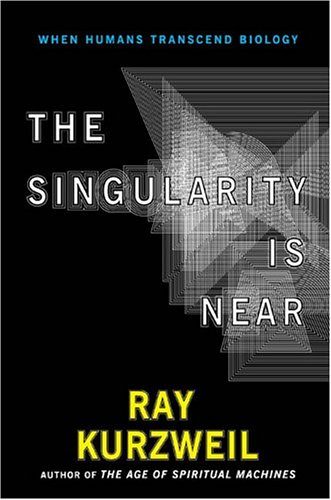
 NB: Inasmuch as Günther was employed by several US government agencies, Günther’s Das Bewusstsein der Maschinen (Krefeld-Baden Baden: Agis Verlag, 1957) is at least accessibleartli in part in English, e.g.—and especially note the science fiction locus—“Can Mechanical Consciousness Exist,” Stng Stories, Vol. 29, No.1 (1953): 110-116.  Contemporary scholars may find this reference of interest more because of a hoped for resonance, say with Simondon rather than anything else or else owing to an interest in Ray Kurzweil’s mystical vision of technology in his The Singularity is Near: When Humans Transcend Biology(Hassocks: Penguin, 2006). A product in a consummate fashion of the last century and dying in the Orwellian year of 1984, Günther, an enthusiastically pro-American German could not have been less Orwellian. He is worth our attention as a useful guide to what might have been hoped for as a result of possible logics in the wake of Gödel’s challenge to the same and Gödel was interested in Günther’s Idee und Grundriss einer nicht-Aristotelischen Logik (Hamburg: Meiner, 1959). But see too Jean-Pierre Dupuy, The Mechanization of the Mind (Princeton: Princeton University Press, 2000). 

 Günther himself, a German-American systems thinker, echoes an audaciously technological optimism which we may recognize as sympathetic to Sorgner’s transhumanism. As Sloterdijk explains it, we find in Günther’s work
the concept of a “formless matter” [that] embodies … all that’s been thought between Hegel and Turing on the relation of “things” to “mind.” It tests out a trivalent—or multivalent—logic that’s so potent it could rid us of the impotent, brutal binarism of the mind/thing, subject/object, idea/matter type…  Sloterdijk with Alliez, “Living Hot, Thinking Coldly,” p. 318.
I should add that it matters here that Sloterdijk also recommends the cybernetician, in today’s terms, the theoretical neuroscientist, Warren McCulloch, who was “junior,” as Sloterdijk reminds us, helping us keep our time consciousness here, to Norbert Weiner.


McCulloch was author of Embodiments of Mind (Cambridge, MA: MIT Press, 1965). 


One does well to consult, if one were in need of such an idealization (as one is hardly in need of such these days) od cybernetics, here qua proto-cognitive science, and psychology, including a passing swipe at psychiatry (the latter as much for its circularity as its cupidity), McCulloch’s The Past of a Delusion (Chicago: Chicago Literary Club, 1953). 

McCulloch trained as a physician and studied psychoanalysis with Ferenczi, challenges Freud’s unconscious in economic terms, rather as Adolf Grünbaum has sought to do in related ventures in the Pittsburgh tradition of the philosophy of science. 

Where McCulloch supposed that one needed to integrate new understandings into the account of the mind, suggesting that one  
“contrast Freud’s delusion with the sad humility of Sherrington, who though he knows more physiology of brains that any other Englishman,  admitted that for him in this world, Mind goes more ghostly than a ghost.” (21-22)
McCulloch’s real objection turned upon the foundation of what he called Freud’s delusion (and thus the title of McCulloch’s essay), i.e., and shades again of Grünbaum, psychoanalysis: 
“One of the cornerstones of Freud’s delusions is that we forget no single jot or tittle of what at any time has happened to us.  By calculations that began naïvely with the senior Oliver Wendell Holmes and are today best handled by the physicist von Förster, man’s head would have to be about the size of a small elephant to hold that much. His body could not eat enough to energize its mere retention even if we suppose a single molecule of structuring protein would serve as trace. Actually the mean half-life of a trace in human memory, and of a molecule of protein, is only half a day. Some few per cent of engrams do survive, presumably because we recreate the traces in our heads, but that is all fate leaves us of our youth.  Where written words remain to check our senile recollections they often prove us wrong. We rewrite history, inventing the past so it conforms to present needs.  We forget, as our machines forget, because entropic processes incessantly corrupt retention and transmission of all records and all signals. Partly because all men, when pushed, fill in the gaps of memory, partly because hysterics and neurotics generally are most suggestible,  Freud’s so-called findings of repressed unconscious stuff rest on confabulation, perhaps his patients; but where the free associations and the dreams are both his own, there cannot be a question but that Freud did the confabulating.” (23)

Psychoanalysis and its neuronal contents to one side, to this day, there is nothing like cybernetics and systems theory and its allure has animated the military industrial world, especially but not only in the United States.


Saturday, April 7, 2012

Transhumanism and the Image of Science

Today we have science but even more than that we have our belief in science which has long since as Nietzsche also argued replaced the ascetic ideal that was the divine compact that drove the old and new testaments. Now we ourselves, as “machinists and bridge builders of the future” (BGE §14), expect to fabricate ourselves as gods, or just about. And with all the practice we have in the invisible, in the virtual appearances that play on our computer and tablet screens and cell-phone displays, we see ourselves as no longer merely the human beings we just happen to be but “as” our machines, our internet radios, our iPads, our cell-phones. On Facebook, on Twitter, texting our location automatically, triangulating our lives with and above all into the web, we are already transhuman and we imagine that with an implant, be it of a chip, a lens, a titanium joint, or even with new curved blades as legs, à la Oscar Pistorius, or with new ears, or some such thing there will be no limit at all to what we can be and, given the vistas of cyberspace, or at least given the cartographical conceits of a range of gaming domains (seemingly going back no further than Robert E. Howard or maybe J.R. Tolkien), it is argued that there will be no limits to where we can travel or set up shop, and ‘love’ and ‘live.’


But patently, a lot of this is fantasy, good design, and an inattention to details. As many of us have sports shoes we wear for specialty sports, Pistorius has his running legs, and he has his everyday legs which he wears, rather less dramatically, most of the time. 


And what about the rest of us?  What is our vision of ourselves as cyborg, as posthuman?


Tethered to a keyboard, we tell ourselves that we are limitless: scholars tell one another and any popular ear inclined to listen that human beings are (already) transhuman, (already) humanity 2.0. 
Note: This is the name of at least one essay, a documentary film project, a short and formulaic science fiction novel, and a scholarly study. Thus, more critically, see Daniel Kennelly, “Humanity 2.0 The Singularity and Science Fiction,” The American Interest (July/August 2007) as well, less critically, Sarah Chan, “Humanity 2.0? Enhancement, Evolution and the Possible Futures of Humanity,” EMBO Reports, 9 (2008): S70-S74 and not uncritically but with just enough ambiguity to encourage the powers that be, see Steven Fuller’s Humanity 2.0: What it Means to be Human Past, Present and Future (London: Palgrave Macmillan, 2011).  
Welcome to the online, connected, networked, virtual, digital realm. Welcome to your finger on a keyboard, tapping a screen or traced in the air. 

And we might wonder about the relationship between Minority Report’s air tracing gestures and the voice commands favored on Star Trek, yet some already murmur that with Siri, the “new” iPhone already— there’s that ‘already’ word again—does this.

There are some who challenge those who seek to keep a distance between the transhumanist movement and any connection with Nietzsche’s thought. [See here.] For Stefan Sorgner the danger that is anticipated here is an already foregone conclusion. And as he muses, had Nietzsche known of transhumanism, he would have been, because he could only have been, sympathetic with the ideal. 

The only dissonance is a sheerly mechanical one, rather to the extent that transhumanism was once named via cybernetics, and hence associated with Donna Haraway’s ‘cyborgs,’ but this dissonance seems to vanish with Ray Kurzweil’s projection of the ‘technological singularity,’ as an automatic human machine mind-meld, a becoming-machine. 


More exigent writers will note that Kurzweil himself simply takes over or “borrows” the language and the science fantasy assumptions of the San Diego computer scientist and science fiction writer, Vernor Vinge. 
See Vinge's “The Coming Technological Singularity: How to Survive in the Post-Human Era,” lecture presented to the VISION-21 Symposium, NASA Lewis Research Center and the Ohio Aerospace Institute, Mar. 30-31, 1993. See too, Whole Earth Review, Winter 1993. The text of Vinge’s talk is accessible online here.
Rather more gingerly than Kurzweil (and this is true in almost every respect), Vinge contextualizes the language of what he called “the technological singularity” as a techno-theoretical trump card, explained by the cyberneticist Vinge with reference to John von Neumann (where it should be noted that the reference to von Neumann exemplifies a fairly ecstatic conventionality that is a staple in the science fiction world -- and Vinge duly celebrates von Neumann in his fiction as a “Dawn Age genius.”) 
 

Vinge’s new dawn allusion is significant and it should be noted that founding fathers, this is what I meant by calling this a sci-fi staple, from Ray Bradbury to Arthur Clark and Isaac Asimov (and it doesn’t get more staple than that), are permitted any number of limitations because one needs them, just like a real father, for legitimacy’s sake. 

Here the abstract of Vinge’s 1993 lecture on the technological singularity is worth citing and it has a certain punchy quality, as abstracts go:
Within thirty years, we will have the technological means to create superhuman intelligence. Shortly after, the human era will be ended.
Vinge cites Stanisław Ulam as reporting von Neumann in conversation regarding
the ever accelerating progress of technology and changes in the mode of human life, which gives the appearance of approaching some essential singularity in the history of the race beyond which human affairs, as we know them, could not continue.  (Vinge)
Note that Ulam’s retrospective review of von Neumann’s mathematical contributions cites von Neumann on the imminent transience of our human interest in science, here using the term singularity to characterize the prospect of life-altering change.  (See Ulam here, p. 5)
As Vinge points out in a parentheses drawn from Günther Stent, von Neumann himself
even uses the term singularity, though it appears he is thinking of normal progress, not the creation of superhuman intellect. (For me, the superhumanity is the essence of the Singularity. Without that we would get a glut of technical riches, never properly absorbed... (Vinge)
 In the context of the technological singularity, including, as if for good measure, a reference to superhumanity, Vinge’s contextualization requires—as all in-comments require—a context. There are a lot of such references on the theme of the human-superhuman continuum and I would recommend unpacking them with the help of Günther Anders or Peter Sloterdijk or even, to be more esoteric, Jean Baudrillard or Paul Virilio, on one side of the tale, and of any number of more or less triumphalist futurists on the other, I like to think of Vannevar Bush and Hermann Kahn but it is more conventional to think of Marshall McLuhan (it was his ‘year’ last year) or Alvin Toffler and Vinge himself cites Erik Drexler and the seemingly-out-of-touch nuclear power enthusiast (damn the radiation and damn all the other details), Freeman Dyson, in addition to Marvin Minsky and others.


Although I will be making the point in what follows that Nietzsche offers us a good deal of help, philosophically speaking, it is hard to come to terms with triumphalist futurists without going all Frankfurt school on them and the rhetoric of Vinge’s abstract illustrates why. 

First you posit, as Vinge does, the inevitable and “imminent creation by technology of entities with greater than human intelligence.” (Vinge)


Then, having said that this is done by some technology (Vinge, a computer scientist is vague here), you go on to talk about the consequences. 

This is a sales pitch: having invented (better said: assumed or supposed) “superhuman intelligence” (never mind the details), the pitch continues with the declaration that “the human era will be ended” (ibid.) and sagely cautions that one must plan accordingly. 


The rest is science fiction and it is a lot of fun.


Here what interests me is the rhetorical gambit and it depends on authority for its functioning. Paul Feyerabend has recalled the mechanism of such authoritative (trump-card-style) references. Referring to the debates of the 1930s, Feyerabend explained that for decades, during
meetings up to the Fifties the discussion usually went like this. First the defenders of the second interpretation presented their arguments. Then the opponents raised objections. The objections were occasionally quite formidable and could not be easily answered. Then somebody said “but von Neumann has shown …” and with that the opposition was silenced. (Feyerabend, Science in a Free Society, 90)

Continuing in this spirit, one might well suppose that Sorgner’s own arguments would support a claim for Nietzsche’s sympathies for or affinities with cybernetics or cyborgs as indeed for the technological singularity to come, now articulated as simply another way of parsing eternal recurrence. But Sorgner does not do this and he also opts here to defer engaging with the specific reasons articulated by other transhumanists who vigorously attempt to maintain a distance from Nietzsche. Instead (and it should be noted that this is characteristic of a certain kind of philosophical formation), Sorgner proceeds to tell us what Nietzsche would have “liked.”

Thus we are informed that Nietzsche would have been an advocate of transhumanism. If I myself do not find this claim likely, this does not mean that I do not understand Sorgner’s reasons for making such a claim. And I agree that whatever Nietzsche was, he was no traditional humanist, not at least of the garden-variety sort (unless we take that garden, as some do, to have been an Epicurean garden, just as Nietzsche heard this garden reference, all meteorological expression/comprehension, including allusions to Lucretius as well as Diogenes Laertius and not less to what Nietzsche apotheosizes as “personality,” which last term turns out to matter a great deal for today’s transhumanism—avatars and bots anyone?), as his thinking on the human, all-too-human includes all the complexities that were masks for Descartes.
On Epicurus: See Howard Caygill’s luminous essay: “Under the Epicurean Skies,” Angelaki, 11/3 (2006): 107-115 which Caygill himself situates via Usener but especially with reference to A.-J. Festugiére, Epicure et ses dieux (Paris: Presses Universitaires de France, 1946) as well as to be sure the indispensable Pierre Hadot, Philosophy as a Way of Life, trans. Michael Chase (Oxford: Blackwell, 1995).
On Lucretius:  A useful discussion for those who favor, as most Anglophone readers do, Foucault, Agamben, Badiou, etc., is Jonathan Goldberg’s, “Turning toward the World: Lucretius, in Theory,” chapter two of his The Seeds of Things: Theorizing Sexuality and Materiality in Renaissance Representations (NY: Fordham University Press, 2009),  31-63. 
And in the spirit of internet cloaking devices, we should add that if Nietzsche appreciated one thing about Descartes, it was the mask. “Everything profound loves a mask.” (BGE §40)
Anonymity or what today’s lingo calls net-privacy which these days turns out to be less about surfing porn sites than it is about the venality of Microsoft and Sony and Apple who wish to be sure as they already know everything you look at, at being able to charge you for it, thus getting their cut from anything you look at, download, or share online, each and every time you look at it, download, share it.
Sorgner’s work is not at all masked and one of the great strengths of Sorgner’s work is this very straightforward quality. Hence and from the start, Sorgner affirms that when he
first became familiar with the transhumanist movement, I immediately thought that there were many fundamental similarities between transhumanism and Nietzsche’s philosophy, especially concerning the concept of the posthuman and that of Nietzsche’s overhuman. (Sorgner 2009, 29)
But, as Sorgner reflects, apparently with some surprise: a good many transhumanists seem anxious to refuse this coordination. At the same time, Jürgen Habermas, opposing the transhumanist movement concurs with Sorgner’s reading, in an inverse direction, such that Habermas refuses in his own account what Sorgner embraces in his. 


Sorgner’s own reference here is to Habermas, Die Zukunft der menschlichen Natur. Auf dem Weg zu einer liberalen Eugenik? (Frankfurt, 2001), p. 43.
Now, it seems to me, that one can hardly be surprised at this, for Habermas had long opposed Nietzsche in several other respects.

For Habermas’s anxiety concerning the danger of Nietzsche’s thinking, alternately characterized as “infectious” or contagious, see the contributions (including a translation of Habermas’s own 1968 essay on Nietzsche’s epistemology), to Babich, ed., Nietzsche, Habermas, and Critical Theory (Amherst, New York: Humanity Books, 2004).
Thus, and this has, alas, changed the landscape and indeed the intrinsically critical force of critical theory, Habermas differs from the perspective of either an Adorno or a Horkheimer or even a Marcuse, all of whom had more specifically critical tolerance for Nietzsche’s own brand of critical thinking. 


It should, but it does not, go without saying that what Anglo-American philosophers (analytic, broadly conceived, that is: mainstream philosophy) call “critical thinking” (meaning thinking that takes an avowedly pro-science perspective) has nothing in common with either Nietzsche or classical critical theory though it does have some elements in common with Habermas. 


Sorgner seeks to coordinate Nietzsche and transhumanism point for point, in part by citing Nick Boström’s contention that just as transhumanists tend to “view human nature as a work-in-progress,” Nietzsche similarly adheres to “a dynamic will-to-power metaphysics which applies to human and all other beings, and which implies that all things are permanently undergoing some change.”  (2009, 30)
Sorgner cites Nicklas Boström, “Transhumanist Values,” in: Review of Contemporary Philosophy, 4: (2005), here p. 1. Boström teaches philosophy at Oxford University and is the Director of the Future of Humanity Institute. He is also editor with Julian Savulescu of a book on Human Enhancement (Oxford: Oxford University Press, 2009) and takes the notion of the “post-human” condition about as literally as one might wish. For one overview of transhumanism as a concept see Nicholas Agar, “Whereto Transhumanism? The Literature Reaches a Critical Mass,” Hastings Center Report, Vol. 37, No. 3 (May-June 2007): 12-17 as well as Boström, “Human Genetic Enhancements: A Transhumanist Perspective,” Journal of Value Inquiry, Vol. 37, No. 4 (2003): 493-506. Note that discussion continues to be heavily influenced by N. Katherine Hayles, How We Became Posthuman (Chicago: University of Chicago Press, 1999) as well as and in addition to Turkle’s early work, Mark Poster, The Mode of Information: Poststructuralism and Social Context (Chicago: University of Chicago Press, 1990).
So far, so good, one might say. Yet the argumentative parallel in its further projection turns out to cause trouble for Sorgner.  Hence and beyond what he calls “ontological dynamics,” (32) Sorgner locates additional parallels on the level of values, the same level that is important for Boström as for his own part, Boström argues for a normative appreciation of the transhuman. For Boström, this is related to the demarcation of risk analysis that appeals to the speculative projections critical for research of this kind quite independently of anything so trivially ontic as actual research about actual options. Too empirical, one imagines and this, so it may be argued, is the nature of futurology. In his own discussion, Sorgner begins, rightly I believe, by emphasizing both Nietzsche’s critique of religion and morality in addition to underscoring Nietzsche’s regard for science and scientific thinking.


Sorgner’s claim is that Nietzsche can be aligned with those who favor what transhumanists call “human enhancements” just to the extent that “human beings strive for power” and, this is he crux of Sorgner’s argumentative point: “If you will power, then it is in your interest to enhance yourself.” (33) For Sorgner, this point can be taken as supporting the case that Nietzsche could well have been said to
have been in favour of genetic engineering, even though he mainly stresses the importance of education for the occurrence of the evolutionary step towards the overhuman. If genetic engineering, or liberal eugenics, can actually be seen as a special type of education, which is what transhumanists seem to hold, then it is possible that this position would have been held by Nietzsche, too, as education played a significant role in his ethics. He affirmed science, and he was in favour of enhancement, and the bringing about of the overhuman. (35)


Thus we may reconstruct Sorgner’s (and not only Sorgner’s) chained conventionality here: education = evolution = genetic engineering, noting to be sure that both education and genetic evolution are here regarded as kinds of proactive evolution. Hence and just as Boström argues that we should seek to broaden ourselves, Sorgner similarly seeks to argue that this same broadening corresponds to just what Nietzsche meant by self-overcoming. For Sorgner,
Higher humans wish to permanently overcome themselves, to become stronger in the various aspects which can get developed in a human being, so that finally the overhuman can come into existence. In transhumanist thought, Nietzsche’s overhuman is being referred to as “posthuman.” (36)
Patently, Sorgner distinguishes Nietzsche’s post-human from other transhumanist definitions of the posthuman in order to demonstrate that Nietzsche’s Übermensch or overhuman is the posthuman.
Nor do I disagree with this rendering and in general, I do not oppose the metonymic as opposed to the literalist, techno-triumphalist rendering of the language of posthumanism and I myself use this terminology in a related context and with reference to both Umberto Eco and J.-F. Lyotard in Babich, “Nietzsche and the Condition of Post-Modern Thought: Post-Nietzschean Post-Modernism” in: Clayton Koelb, ed., Nietzsche as Postmodernist: Essays Pro and Contra (Albany: State University of New York Press, 1990), 249-266. I alsospoke of the posthuman to render the nuances of the concept of Nietzsche’s Übermensch in Babich, Nietzsche’s Philosophy of Science: Reflecting Science on the Ground of Art and Life (Albany: State University of New York Press, 1994), 12ff
In every case, so Sorgner contends, Nietzsche would have been in favor of enhancement and Sorgner thinks it plausible to suppose that (and at this would be at the very least) Nietzsche believed in a certain transhumanist possibility corresponding in turn to his teaching of the overhuman.

Sorgner goes further in this regard by noting that where the transhumanists fail to provide a basis for their teaching of the transhuman, Nietzsche does provide such a basis, with the consequence that on Sorgner’s reading just this fundament explains the “relevance of the overhuman for his philosophy. The overhuman may even be the ultimate foundation for his worldview.” (39) This foundational and systematic advantage permits Sorgner to offer the coordinate argument that to the extent that the “overhuman represents the meaning of the earth,” it can only be “in the interest of higher humans to permanently overcome themselves.” (40) Key for Sorgner is the focus not on the afterlife, which Sorgner here conceives in a fairly traditionally enlightened parallel or coordination with a focus on science rather than and by contrast with traditional religion, but on meaning instead.


And yet, as we have noted, Sorgner chooses not to take his point of departure by inquiring into the reasons Boström and Habermas in addition to others including, albeit for different reasons, the musically and creatively concerned Jaron Lanier — all of whom do tend to seek to keep Nietzsche at a distance. Indeed: many in the current context of cybernetics/cyborg lifestyle exclude any and all references to Nietzsche, not least perhaps because such references inevitably involve a number of historical and historicist issues. 

 See Jaron Lanier’s You Are Not A Gadget: A Manifesto (New York: Knopf, 2010). It is relevant to the present context that in response to an email inquiry I sent regarding the argument I seek to develop here, Lanier’s first response was the exclamation, “Yikes, Nietzsche studies!” And “Yikes” is the sort of comment that speaks for itself. Elegantly so.
Indeed: many in the current context of cybernetics/cyborg lifestyle exclude any and all references to Nietzsche, not least perhaps because such references inevitably involve a number of historical and historicist issues. These are observations on his opponents not eternal truths and one might think that Sorgner would first offer at least a preliminary reflection, if not on Boström (whom he does consider) or Jaron Lanier (whom Sorgner does not consider, just as Sorgner also excludes reflection on Sloterdijk and Anders, both of whom I already mentioned and to whom I shall return in a later post) then perhaps, at the very least, on the reasons Habermas has for finding it necessary to argue contra the transhumanist movement and indeed regarding Habermas’s reasons for assimilating Nietzsche to the same movement.
This is based upon my essay as published in the current issue of the Agonist, edited by Yunus Tuncel.  See this issue, here, for a leading contribution by Keith Ansell Pearson as well as essays by Paul Loeb and myself with a response by Stefan Sorgner.  

Friday, April 6, 2012

On the “All-too-Human” Dream of Transhumanism

To the extent that we are always ahead of ourselves, always beyond ourselves, the human being is almost inherently metaphysical. And when Nietzsche characterizes the human being as the not-as-yet-determined, the unfinished, the all-too-vague animal—“Er ist das noch nicht festgestellte Thier” (KSA 11, 25 [428], 125)—he plays on this being ahead of ourselves, being beyond ourselves quality as our specific quality.


We can call this adaptability, many call it intelligence, and it is also what makes us the religious animal par excellence: the animal that, unlike other animals, not only has beliefs but can hang on to them blindly and until its dying day, no less. It is also what we could call our human exceptionalism: our conviction that we are other, higher, better than other animals, a belief that the ancient Greeks, as Nietzsche also noted, were able to advance to the insight that allowed them a kind of moral superiority to the gods.


More than the Judaeo-Christian ideal of creation in the image of the divine but, and much rather in some inchoate and above all invisible fashion (key elements of the metaphysical realm) ‘better’ than the gods, the human being was entitled to sit in judgment of his gods, denouncing their petty vanities and the cupidity that tended to turn out so badly for the human. And all peoples rate their gods in one way or another—our god is higher, your divinities are lower still: indeed your divinities are false gods, empty fantasies, mere and only idols.

Thus the human being, as Nietzsche also argued, invented truth and used it to prop up the furniture of the beyond, contra the immediate, sensible, real, all and always to his own advantage, and for at least as long as he could hold what he thus called the truth as truth.

Today we have science but even more than that we have our belief in science which has long since as Nietzsche also argued replaced the ascetic ideal that was the divine compact that drove the old and new testaments. Now we ourselves, as “machinists and bridge builders of the future” (BGE §14), expect to fabricate ourselves as gods, or just about. And with all the practice we have in the invisible, in the virtual appearances that play on our computer and tablet screens and cell-phone displays, we see ourselves as no longer merely the human beings we just happen to be but “as” our machines, our internet radios, our iPads, our cell-phones. On Facebook, on Twitter, texting our location automatically, triangulating our lives with and above all into the web, we are already transhuman and we imagine that with an implant, be it of a chip, a lens, a titanium joint, or even with new curved blades as legs, à la Oscar Pistorius, or with new ears, or some such thing there will be no limit at all to what we can be and, given the vistas of cyberspace, or at least given the cartographical conceits of a range of gaming domains (seemingly going back no further than Robert E. Howard or maybe J.R. Tolkien), it is argued that there will be no limits to where we can travel or set up shop, and ‘love’ and ‘live.’


But patently, a lot of this is fantasy, good design, and an inattention to details. As many of us have sports shoes we wear for specialty sports, Pistorius has his running legs, and he has his everyday legs which he wears, rather less dramatically, most of the time. 


And what about the rest of us?  What is our vision of ourselves as cyborg, as posthuman?

Tethered to a keyboard, we tell ourselves that we are limitless: scholars tell one another and any popular ear inclined to listen that human beings are (already) transhuman, (already) humanity 2.0. 
Note: This is the name of at least one essay, a documentary film project, a short and formulaic science fiction novel, and a scholarly study. Thus, more critically, see Daniel Kennelly, “Humanity 2.0 The Singularity and Science Fiction,” The American Interest (July/August 2007) as well, less critically, Sarah Chan, “Humanity 2.0? Enhancement, Evolution and the Possible Futures of Humanity,” EMBO Reports, 9 (2008): S70-S74 and not uncritically but with just enough ambiguity to encourage the powers that be, see Steven Fuller’s Humanity 2.0: What it Means to be Human Past, Present and Future (London: Palgrave Macmillan, 2011).  
Welcome to the online, connected, networked, virtual, digital realm. Welcome to your finger on a keyboard, tapping a screen or traced in the air. And we might wonder about the relationship between Minority Report’s air tracing gestures and the voice commands favored on Star Trek, yet some already murmur that with Siri, the “new” iPhone already— there’s that ‘already’ word again—does this.

Stefan Sorgner challenges those who seek to keep a distance between the transhumanist movement and any connection with Nietzsche’s thought. [See here.] For Sorgner the danger that is anticipated here is an already foregone conclusion. And as he muses, had Nietzsche known of transhumanism, he would have been, because he could only have been, sympathetic with the ideal. 


The only dissonance is a sheerly mechanical one, rather to the extent that transhumanism was once named via cybernetics, and hence associated with Donna Haraway’s ‘cyborgs,’ but this dissonance seems to vanish with Ray Kurzweil’s projection of the ‘technological singularity,’ as an automatic human machine mind-meld, a becoming-machine. 


More exigent writers will note that Kurzweil himself simply takes over or “borrows” the language and the science fantasy assumptions of the San Diego computer scientist and science fiction writer, Vernor Vinge. 
See Vinge's “The Coming Technological Singularity: How to Survive in the Post-Human Era,” lecture presented to the VISION-21 Symposium, NASA Lewis Research Center and the Ohio Aerospace Institute, Mar. 30-31, 1993. See too, Whole Earth Review, Winter 1993. The text of Vinge’s talk is accessible online here.
Rather more gingerly than Kurzweil (and this is true in almost every respect), Vinge contextualizes the language of what he called “the technological singularity” as a techno-theoretical trump card, explained by the cyberneticist Vinge with reference to John von Neumann (where it should be noted that the reference to von Neumann exemplifies a fairly ecstatic conventionality that is a staple in the science fiction world -- and Vinge duly celebrates von Neumann in his fiction as a “Dawn Age genius.”) 
 

Vinge’s new dawn allusion is significant and it should be noted that founding fathers, this is what I meant by calling this a sci-fi staple, from Ray Bradbury to Arthur Clark and Isaac Asimov (and it doesn’t get more staple than that), are permitted any number of limitations because one needs them, just like a real father, for legitimacy’s sake. 
Here the abstract of Vinge’s 1993 lecture on the technological singularity is worth citing and it has a certain punchy quality, as abstracts go:
Within thirty years, we will have the technological means to create superhuman intelligence. Shortly after, the human era will be ended.
Vinge cites Stanisław Ulam as reporting von Neumann in conversation regarding
the ever accelerating progress of technology and changes in the mode of human life, which gives the appearance of approaching some essential singularity in the history of the race beyond which human affairs, as we know them, could not continue.  (Vinge)
Note that Ulam’s retrospective review of von Neumann’s mathematical contributions cites von Neumann on the imminent transience of our human interest in science, here using the term singularity to characterize the prospect of life-altering change.  (See Ulam here, p. 5)
As Vinge points out in a parentheses drawn from Günther Stent, von Neumann himself
even uses the term singularity, though it appears he is thinking of normal progress, not the creation of superhuman intellect. (For me, the superhumanity is the essence of the Singularity. Without that we would get a glut of technical riches, never properly absorbed...) (Vinge)
 In the context of the technological singularity, including, as if for good measure, a reference to superhumanity, Vinge’s contextualization requires—as all in-comments require—a context. There are a lot of such references on the theme of the human-superhuman continuum and I would recommend unpacking them with the help of Günther Anders or Peter Sloterdijk or even, to be more esoteric, Jean Baudrillard or Paul Virilio, on one side of the tale, and of any number of more or less triumphalist futurists on the other, I like to think of Vannevar Bush and Hermann Kahn but it is more conventional to think of Marshall McLuhan (it was his ‘year’ last year) or Alvin Toffler and Vinge himself cites Erik Drexler and the seemingly-out-of-touch nuclear power enthusiast (damn the radiation and damn all the other details), Freeman Dyson, in addition to Marvin Minsky and others.

Although I will be making the point in what follows that Nietzsche offers us a good deal of help, philosophically speaking, it is hard to come to terms with triumphalist futurists without going all Frankfurt school on them and the rhetoric of Vinge’s abstract illustrates why. 

First you posit, as Vinge does, the inevitable and “imminent creation by technology of entities with greater than human intelligence.” (Vinge)


Then, having said that this is done by some technology (Vinge, a computer scientist is vague here), you go on to talk about the consequences. 

This is a sales pitch: whereby having invented (or better said assumed or supposed) “superhuman intelligence” (never mind the details), the pitch continues with the declaration that “the human era will be ended” (ibid.) and thus advises that one plan accordingly. 

The rest is science fiction and it is a lot of fun.


What interests me here is the rhetorical gambit and it depends on authority for its functioning. Paul Feyerabend has recalled the mechanism of such authoritative (trump-card-style) references. Referring to the debates of the 1930s, Feyerabend explained that for decades, during
meetings up to the Fifties the discussion usually went like this. First the defenders of the second interpretation presented their arguments. Then the opponents raised objections. The objections were occasionally quite formidable and could not be easily answered. Then somebody said “but von Neumann has shown …” and with that the opposition was silenced. (Feyerabend, Science in a Free Society, 90)

Continuing in this spirit, one might well suppose that Sorgner’s own arguments would support a claim for Nietzsche’s sympathies for or affinities with cybernetics or cyborgs as indeed for the technological singularity to come, now articulated as simply another way of parsing eternal recurrence. But Sorgner does not do this and he also opts here to defer engaging with the specific reasons articulated by other transhumanists who vigorously attempt to maintain a distance from Nietzsche. Instead (and it should be noted that this is characteristic of a certain kind of philosophical formation), Sorgner proceeds to tell us what Nietzsche would have “liked.”

Thus we are informed that Nietzsche would have been an advocate of transhumanism. If I myself do not find this claim likely, this does not mean that I do not understand Sorgner’s reasons for making such a claim. And I agree that whatever Nietzsche was, he was no traditional humanist, not at least of the garden-variety sort (unless we take that garden, as some do, to have been an Epicurean garden, just as Nietzsche heard this garden reference, all meteorological expression/comprehension, including allusions to Lucretius as well as Diogenes Laertius and not less to what Nietzsche apotheosizes as “personality,” which last term turns out to matter a great deal for today’s transhumanism—avatars and bots anyone?), as his thinking on the human, all-too-human includes all the complexities that were masks for Descartes.
On Epicurus: See Howard Caygill’s luminous essay: “Under the Epicurean Skies,” Angelaki, 11/3 (2006): 107-115 which Caygill himself situates via Usener but especially with reference to A.-J. Festugiére, Epicure et ses dieux (Paris: Presses Universitaires de France, 1946) as well as to be sure the indispensable Pierre Hadot, Philosophy as a Way of Life, trans. Michael Chase (Oxford: Blackwell, 1995).
On Lucretius:  a useful discussion for those who favor, as most Anglophone readers do, Foucault, Agamben, Badiou, etc., is Jonathan Goldberg’s, “Turning toward the World: Lucretius, in Theory,” chapter two of his The Seeds of Things: Theorizing Sexuality and Materiality in Renaissance Representations (NY: Fordham University Press, 2009),  31-63. 
And in the spirit of internet cloaking devices, we should add that if Nietzsche appreciated one thing about Descartes, it was the mask. “Everything profound loves a mask.” (BGE §40)
Anonymity or what today’s lingo calls net-privacy which these days turns out to be less about surfing porn sites than it is about the venality of Microsoft and Sony and Apple who wish to be sure as they already know everything you look at, at being able to charge you for it, thus getting their cut from anything you look at, download, or share online, each and every time you look at it, download, share it.
Sorgner’s work is not masked and one of the great strengths of Sorgner’s work is this very straightforward quality. Hence and from the start, Sorgner reminds us that
 When I first became familiar with the transhumanist movement, I immediately thought that there were many fundamental similarities between transhumanism and Nietzsche’s philosophy, especially concerning the concept of the posthuman and that of Nietzsche’s overhuman. (Sorgner 2009, 29)
But, as Sorgner reflects, apparently with some surprise: a good many transhumanists seem anxious to refuse this coordination. At the same time, Jürgen Habermas, opposing the transhumanist movement concurs with Sorgner’s reading, in an inverse direction, such that Habermas refuses in his own account what Sorgner embraces in his. 


Sorgner’s own reference here is to Habermas, Die Zukunft der menschlichen Natur. Auf dem Weg zu einer liberalen Eugenik? (Frankfurt, 2001), p. 43.
Now, it seems to me, that one can hardly be surprised at this, for Habermas had long opposed Nietzsche in several other respects.

For Habermas’s anxiety concerning the danger of Nietzsche’s thinking, alternately characterized as “infectious” or contagious, see the contributions (including a translation of Habermas’s own 1968 essay on Nietzsche’s epistemology), to Babich, ed., Nietzsche, Habermas, and Critical Theory (Amherst, New York: Humanity Books, 2004).
Thus, and this has, alas, changed the landscape and indeed the intrinsically critical force of critical theory, Habermas differs from the perspective of either an Adorno or a Horkheimer or even a Marcuse, all of whom had more specifically critical tolerance for Nietzsche’s own brand of critical thinking. 

It should, but it does not, go without saying that what Anglo-American philosophers (analytic, broadly conceived, that is: mainstream philosophy) call “critical thinking” (meaning thinking that takes an avowedly pro-science perspective) has nothing in common with either Nietzsche or classical critical theory though it does have some elements in common with Habermas. 

Sorgner seeks to coordinate Nietzsche and transhumanism point for point, in part by citing Nick Boström’s contention that just as transhumanists tend to “view human nature as a work-in-progress,” Nietzsche similarly adheres to “a dynamic will-to-power metaphysics which applies to human and all other beings, and which implies that all things are permanently undergoing some change.”  (2009, 30)
Sorgner cites Nicklas Boström, “Transhumanist Values,” in: Review of Contemporary Philosophy, 4: (2005), here p. 1. Boström teaches philosophy at Oxford University and is the Director of the Future of Humanity Institute. He is also editor with Julian Savulescu of a book on Human Enhancement (Oxford: Oxford University Press, 2009) and takes the notion of the “post-human” condition about as literally as one might wish. For one overview of transhumanism as a concept see Nicholas Agar, “Whereto Transhumanism? The Literature Reaches a Critical Mass,” Hastings Center Report, Vol. 37, No. 3 (May-June 2007): 12-17 as well as Boström, “Human Genetic Enhancements: A Transhumanist Perspective,” Journal of Value Inquiry, Vol. 37, No. 4 (2003): 493-506. Note that discussion continues to be heavily influenced by N. Katherine Hayles, How We Became Posthuman (Chicago: University of Chicago Press, 1999) as well as and in addition to Turkle’s early work, Mark Poster, The Mode of Information: Poststructuralism and Social Context (Chicago: University of Chicago Press, 1990).
So far, so good, one might say. Yet the argumentative parallel in its further projection turns out to cause trouble for Sorgner.  Hence and beyond what he calls “ontological dynamics,” (32) Sorgner locates additional parallels on the level of values, the same level that is important for Boström as for his own part, Boström argues for a normative appreciation of the transhuman. For Boström, this is related to the demarcation of risk analysis that appeals to the speculative projections critical for research of this kind quite independently of anything so trivially ontic as actual research about actual options. Too empirical, one imagines and this, so it may be argued, is the nature of futurology. In his own discussion, Sorgner begins, rightly I believe, by emphasizing both Nietzsche’s critique of religion and morality in addition to underscoring Nietzsche’s regard for science and scientific thinking.

Sorgner’s claim is that Nietzsche can be aligned with those who favor what transhumanists call “human enhancements” just to the extent that “human beings strive for power” and, this is he crux of Sorgner’s argumentative point: “If you will power, then it is in your interest to enhance yourself.” (33) For Sorgner, this point can be taken as supporting the case that Nietzsche could well have been said to
have been in favour of genetic engineering, even though he mainly stresses the importance of education for the occurrence of the evolutionary step towards the overhuman. If genetic engineering, or liberal eugenics, can actually be seen as a special type of education, which is what transhumanists seem to hold, then it is possible that this position would have been held by Nietzsche, too, as education played a significant role in his ethics. He affirmed science, and he was in favour of enhancement, and the bringing about of the overhuman. (35)


Thus we may reconstruct Sorgner’s (and not only Sorgner’s) chained conventionality here: education = evolution = genetic engineering, noting to be sure that both education and genetic evolution are here regarded as kinds of proactive evolution. Hence and just as Boström argues that we should seek to broaden ourselves, Sorgner similarly seeks to argue that this same broadening corresponds to just what Nietzsche meant by self-overcoming. For Sorgner,
Higher humans wish to permanently overcome themselves, to become stronger in the various aspects which can get developed in a human being, so that finally the overhuman can come into existence. In transhumanist thought, Nietzsche’s overhuman is being referred to as “posthuman.” (36)
Patently, Sorgner distinguishes Nietzsche’s post-human from other transhumanist definitions of the posthuman in order to demonstrate that Nietzsche’s Übermensch or overhuman is the posthuman.
Nor do I disagree with this rendering and in generaly I do not oppose the metonymic as opposed to the literalist, techno-triumphalist rendering of the language of posthumanism and I myself use this terminology in a related context and with reference to both Umberto Eco and J.-F. Lyotard in Babich, “Nietzsche and the Condition of Post-Modern Thought: Post-Nietzschean Post-Modernism” in: Clayton Koelb, ed., Nietzsche as Postmodernist: Essays Pro and Contra (Albany: State University of New York Press, 1990), 249-266. I alsospoke of the posthuman to render the nuances of the concept of Nietzsche’s Übermensch in Babich, Nietzsche’s Philosophy of Science: Reflecting Science on the Ground of Art and Life (Albany: State University of New York Press, 1994), 12ff
In every case, so Sorgner contends, Nietzsche would have been in favor of enhancement and Sorgner thinks it plausible to suppose that (and at this would be at the very least) Nietzsche believed in a certain transhumanist possibility corresponding in turn to his teaching of the overhuman.
Sorgner goes further in this regard by noting that where the transhumanists fail to provide a basis for their teaching of the transhuman, Nietzsche does provide such a basis, with the consequence that on Sorgner’s reading just this fundament explains the “relevance of the overhuman for his philosophy. The overhuman may even be the ultimate foundation for his worldview.” (39) This foundational and systematic advantage permits Sorgner to offer the coordinate argument that to the extent that the “overhuman represents the meaning of the earth,” it can only be “in the interest of higher humans to permanently overcome themselves.” (40) Key for Sorgner is the focus not on the afterlife, which Sorgner here conceives in a fairly traditionally enlightened parallel or coordination with a focus on science rather than and by contrast with traditional religion, but on meaning instead.

And yet, as we have noted, Sorgner chooses not to take his point of departure by inquiring into the reasons Boström and Habermas in addition to others including, albeit for different reasons, the musically and creatively concerned Jaron Lanier — all of whom do tend to seek to keep Nietzsche at a distance. Indeed: many in the current context of cybernetics/cyborg lifestyle exclude any and all references to Nietzsche, not least perhaps because such references inevitably involve a number of historical and historicist issues. 

 See Jaron Lanier’s You Are Not A Gadget: A Manifesto (New York: Knopf, 2010). It is relevant to the present context that in response to an email inquiry I sent regarding the argument I seek to develop here, Lanier’s first response was the exclamation, “Yikes, Nietzsche studies!” And “Yikes” is the sort of comment that speaks for itself. Elegantly so.
Indeed: many in the current context of cybernetics/cyborg lifestyle exclude any and all references to Nietzsche, not least perhaps because such references inevitably involve a number of historical and historicist issues. These are observations on his opponents not eternal truths and one might think that Sorgner would first offer at least a preliminary reflection, if not on Boström (whom he does consider) or Jaron Lanier (whom Sorgner does not here consider, just as Sorgner here also excludes reflection on Sloterdijk and above all perhaps on Anders) then perhaps, at the very least, on the reasons Habermas has for finding it necessary to argue contra the transhumanist movement and indeed regarding Habermas’s reasons for assimilating Nietzsche to the same movement.
The foregoing is based upon my essay as published in the current issue of the Agonist, edited by Yunus Tuncel.  See this issue, here, for a leading essay by Keith Ansell Pearson with essays by Paul Loeb and by myself, with a response by Stefan Sorgner.